Soda Springs Cabin
Soda Springs Cabin Remodel
TYPE: Remodel, Addition, Energy Retrofit
SIZE: 1800 SF
LOCATION: Northern California, Donner Summit
DATE: 2010
DESIGN: Mela Breen | Atmosphere Design Build
CONTRACTOR: Atmosphere Design Build
STRUCTURAL ENGINEER: Mark Jokerst, SE
PUBLICATION: Cabin Life, August 2014
Houzz Tour: This California Cabin Is a Family Affair
Photography: Kat Alves
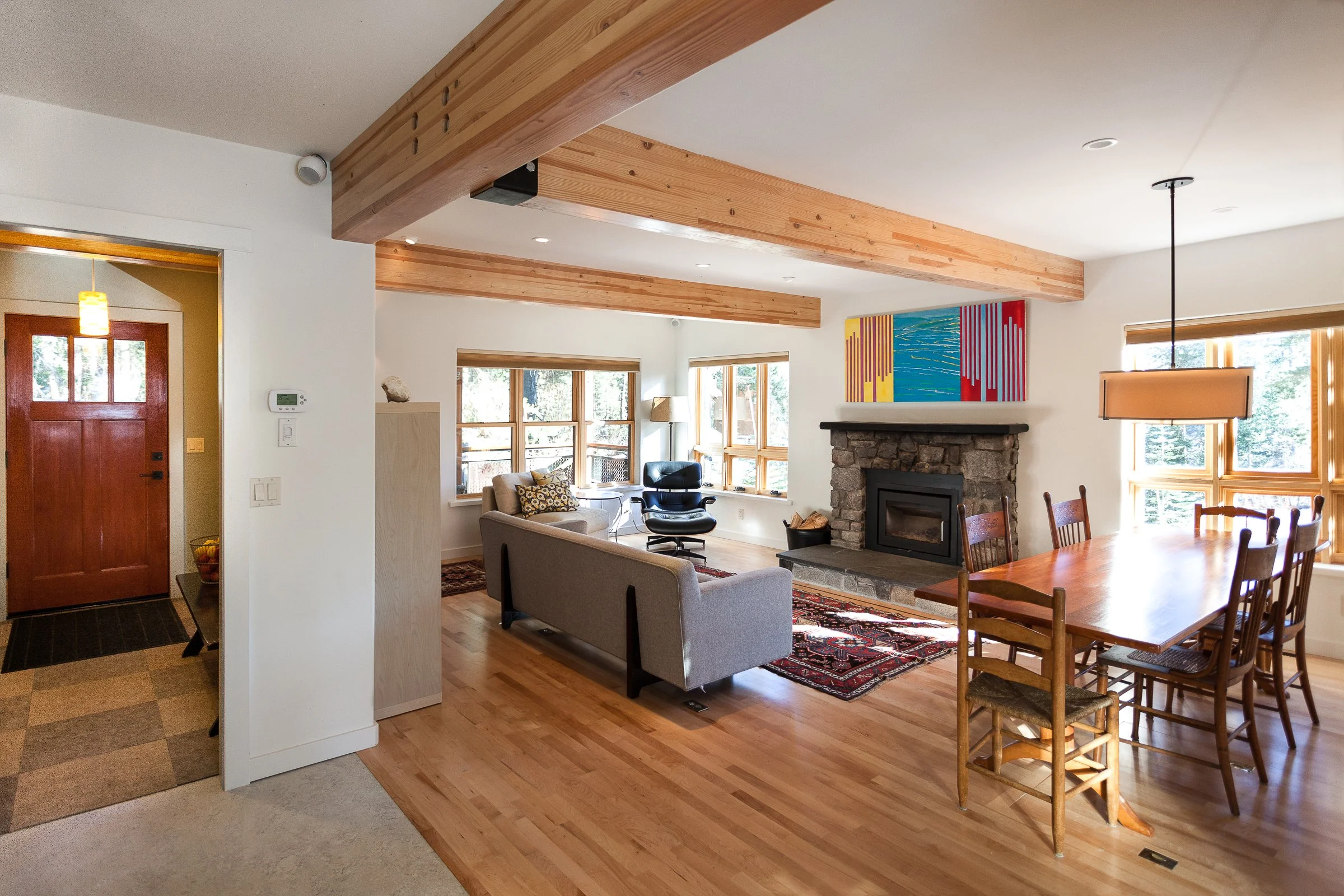
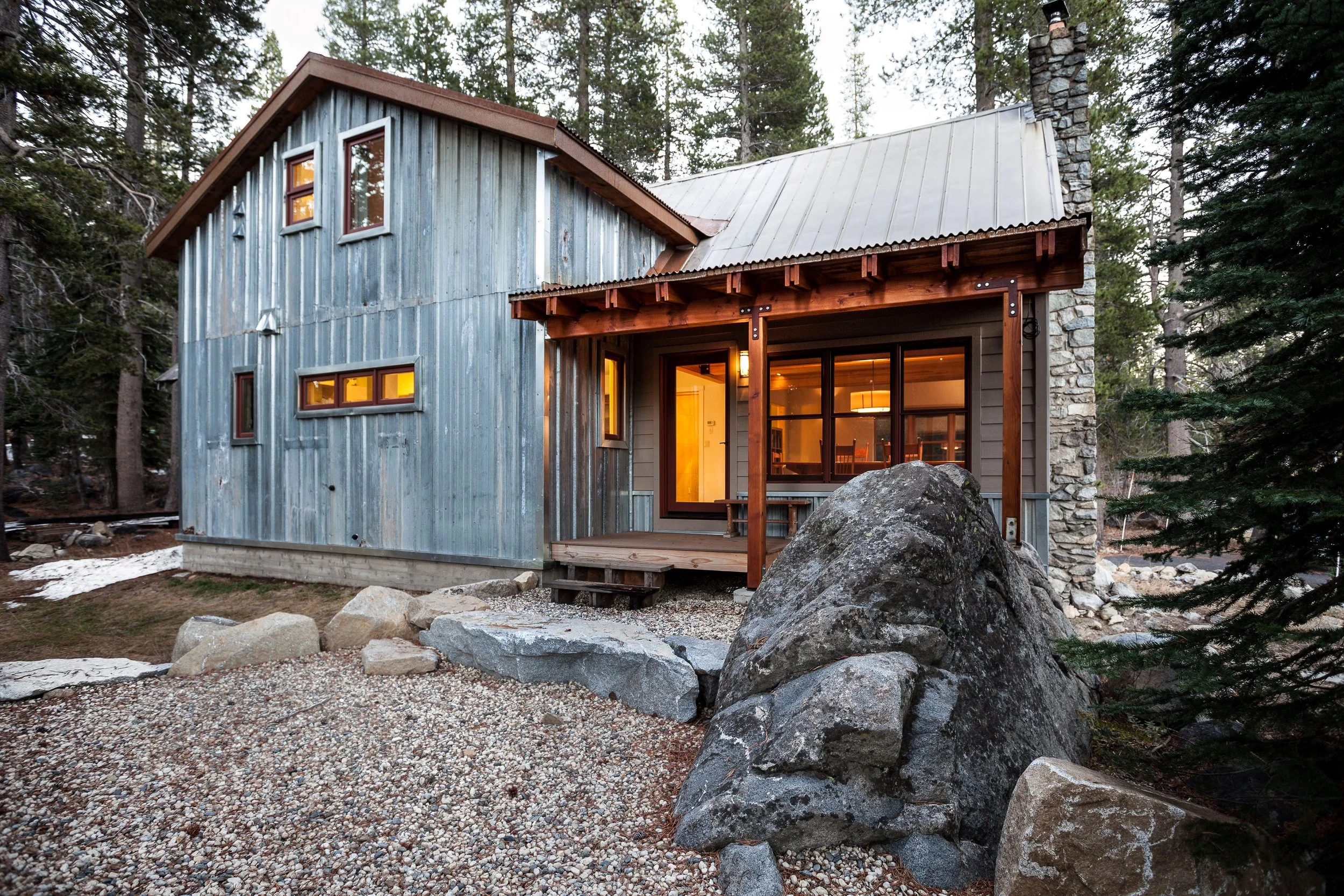
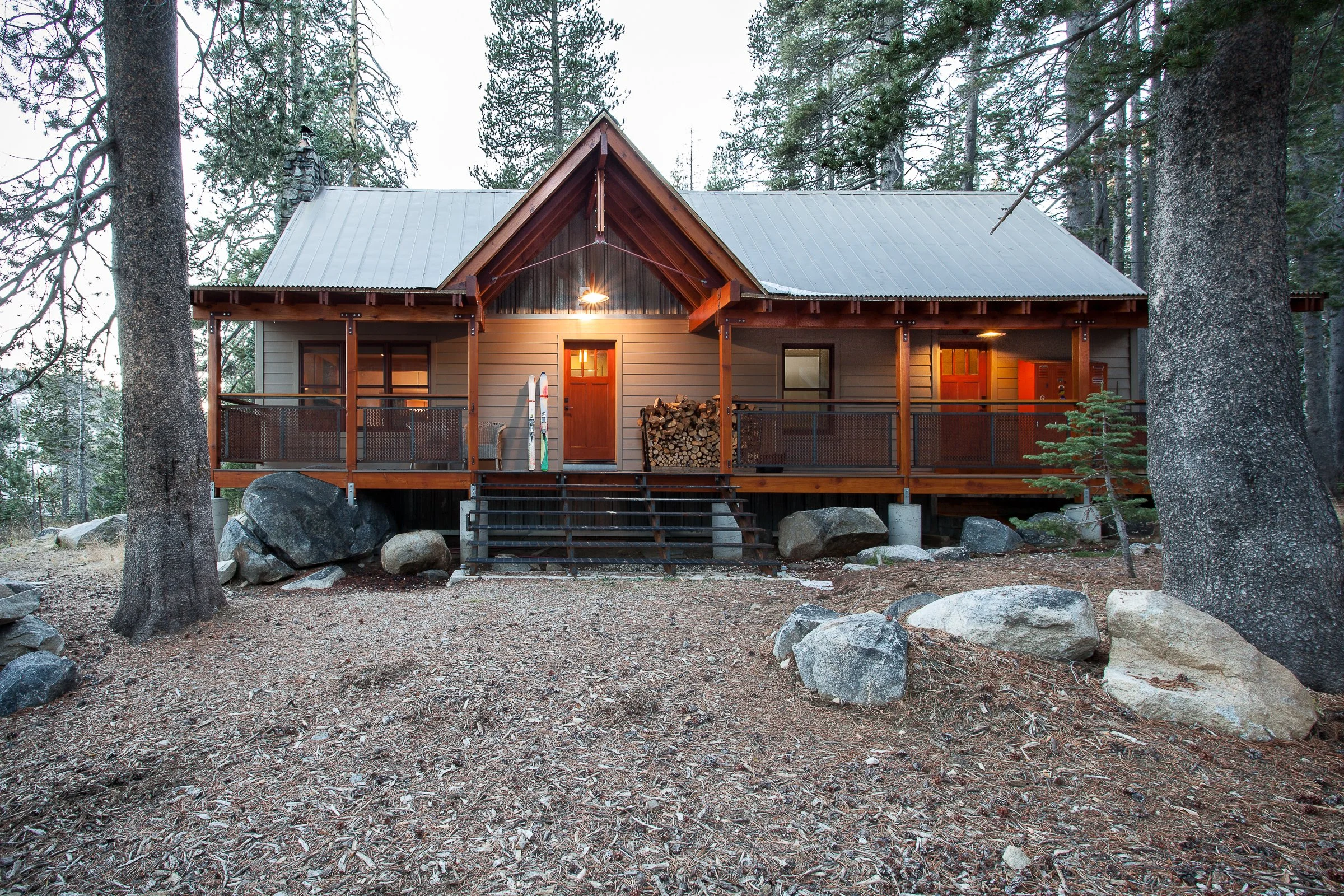
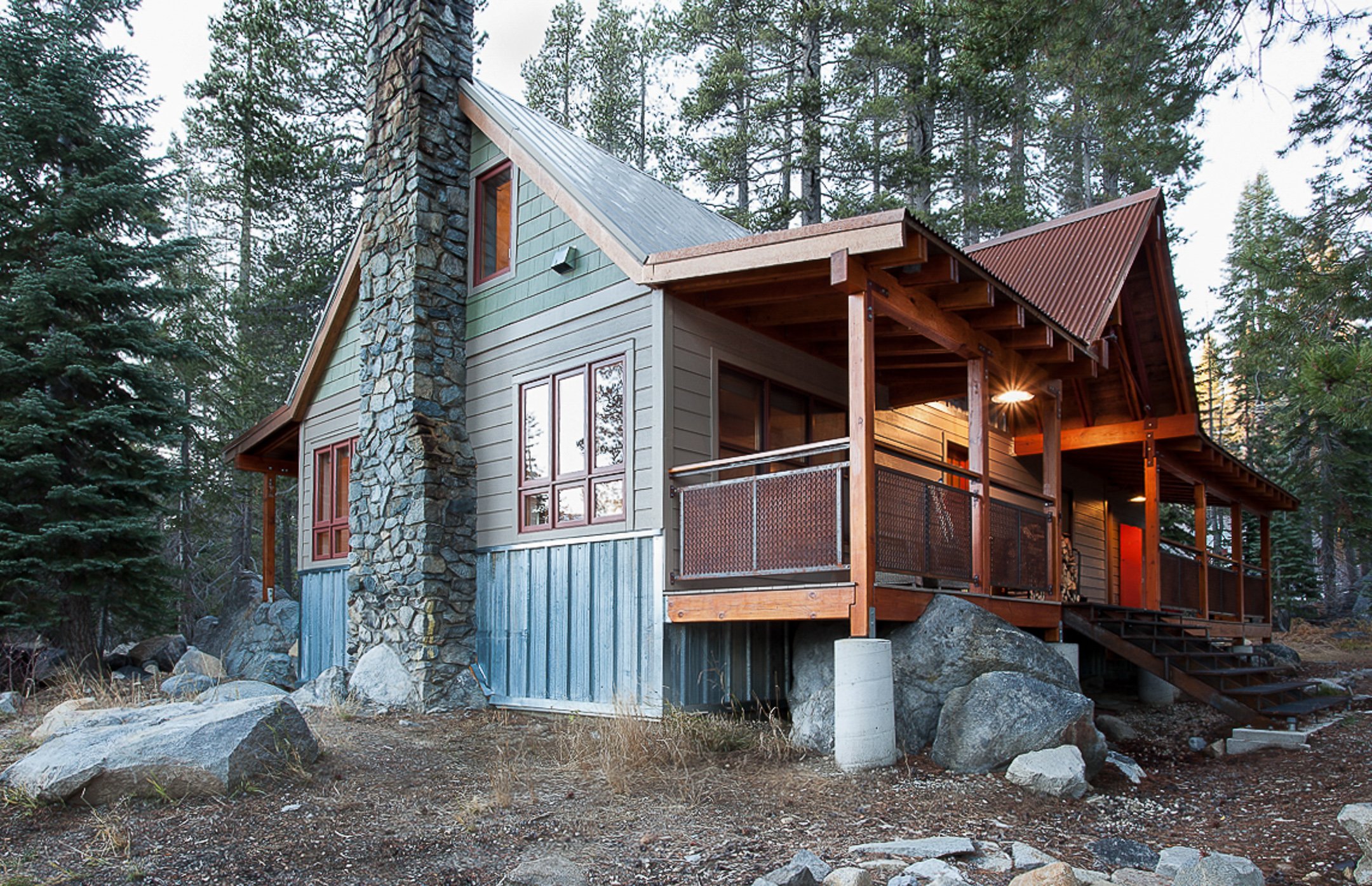
Rejuvenation, birth of the next generation, and respect for place were the governing guidelines for the Soda Springs cabin. The intent of the project was to create a year-round family cabin that is energy efficient, that functions well in the winter months and that provides a center for an active multi-generational family. The original building, a drafty summer cabin with no insulation and single pane windows, was dark and structurally compromised from the years of punishing snow loads. An existing native stone fireplace and steep gable roof provide the architectural language and changes to the building worked within this simple western vernacular. The interior layout of the building was rearranged to create better circulation paths, public and private spaces were created that are both open and intimate, and versatility of activity is considered in the design.
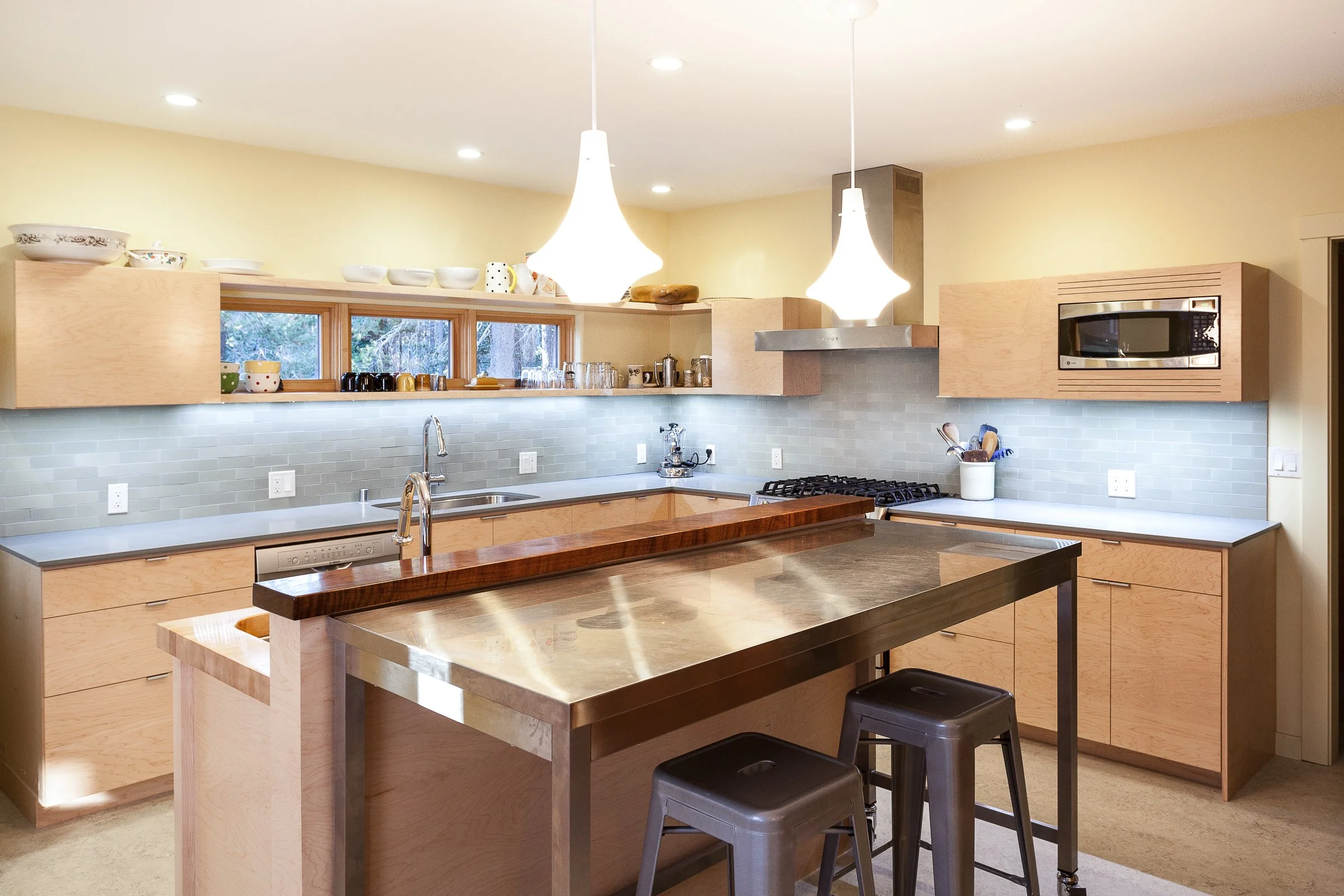
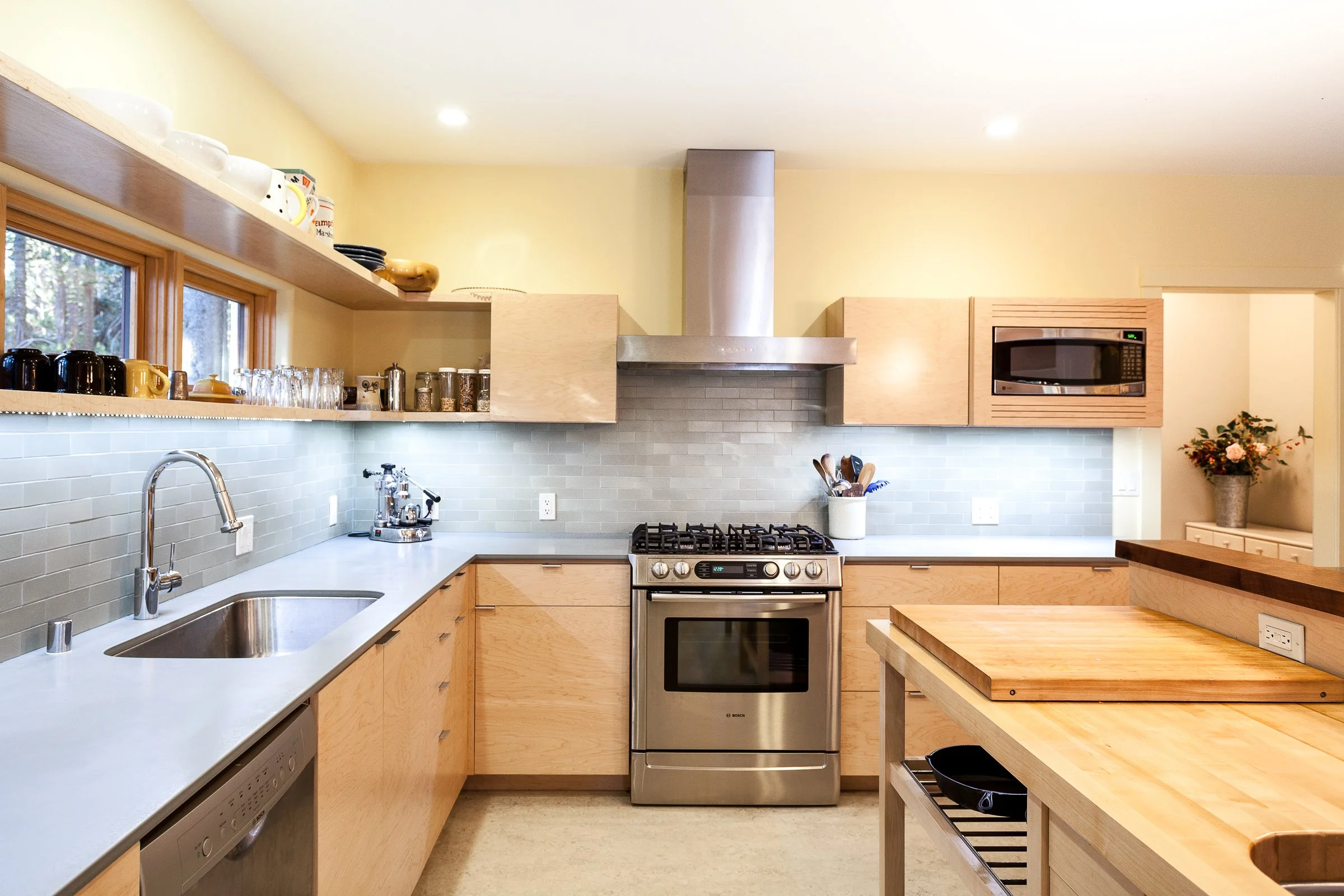
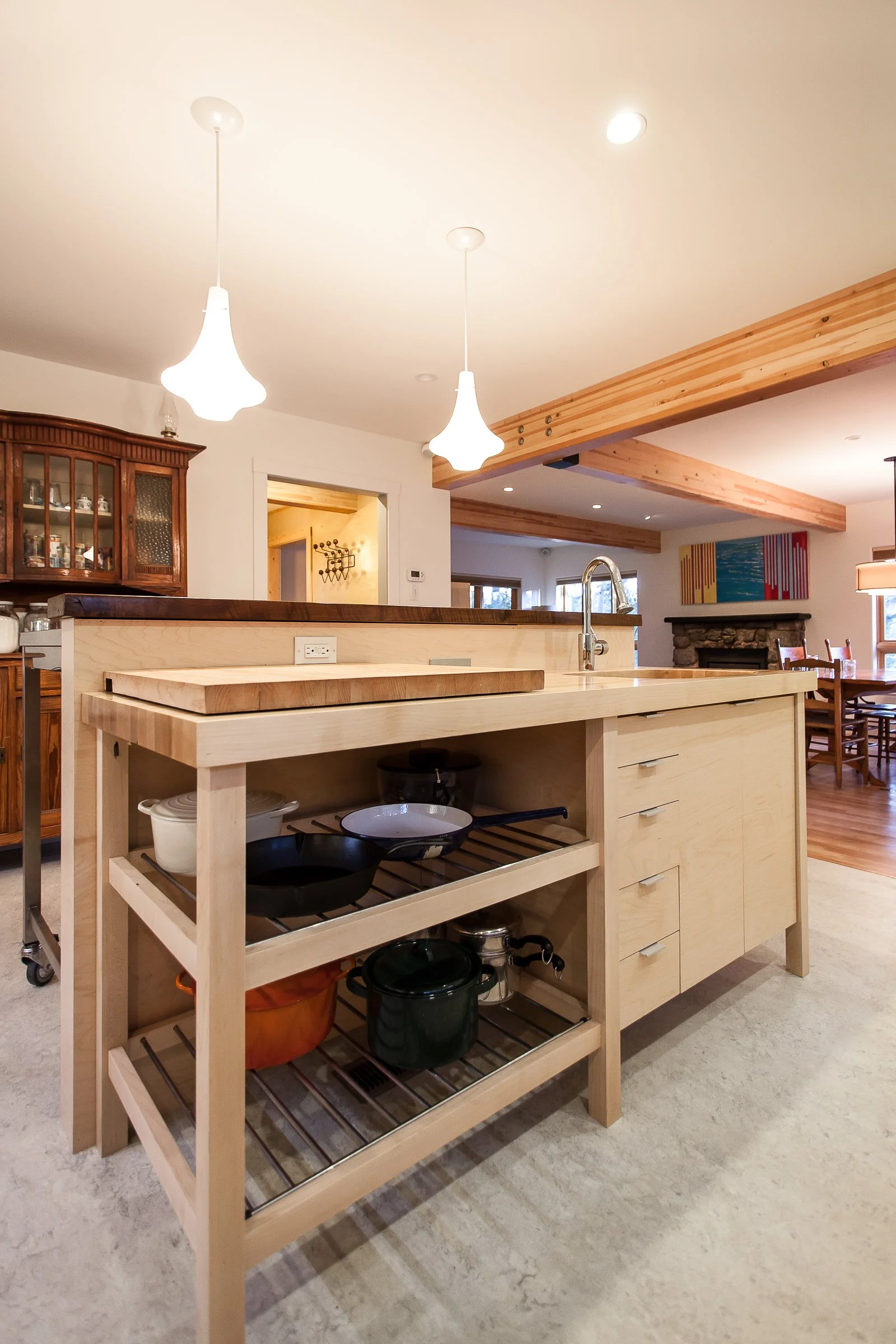
Reclaimed building materials are used throughout - including maple gym flooring, salvaged metal siding, and steel panels found in a junk yard that were fabricated into the deck railing. Cabinetry and custom designed built-in future were handcrafted by Atmosphere Design Build.
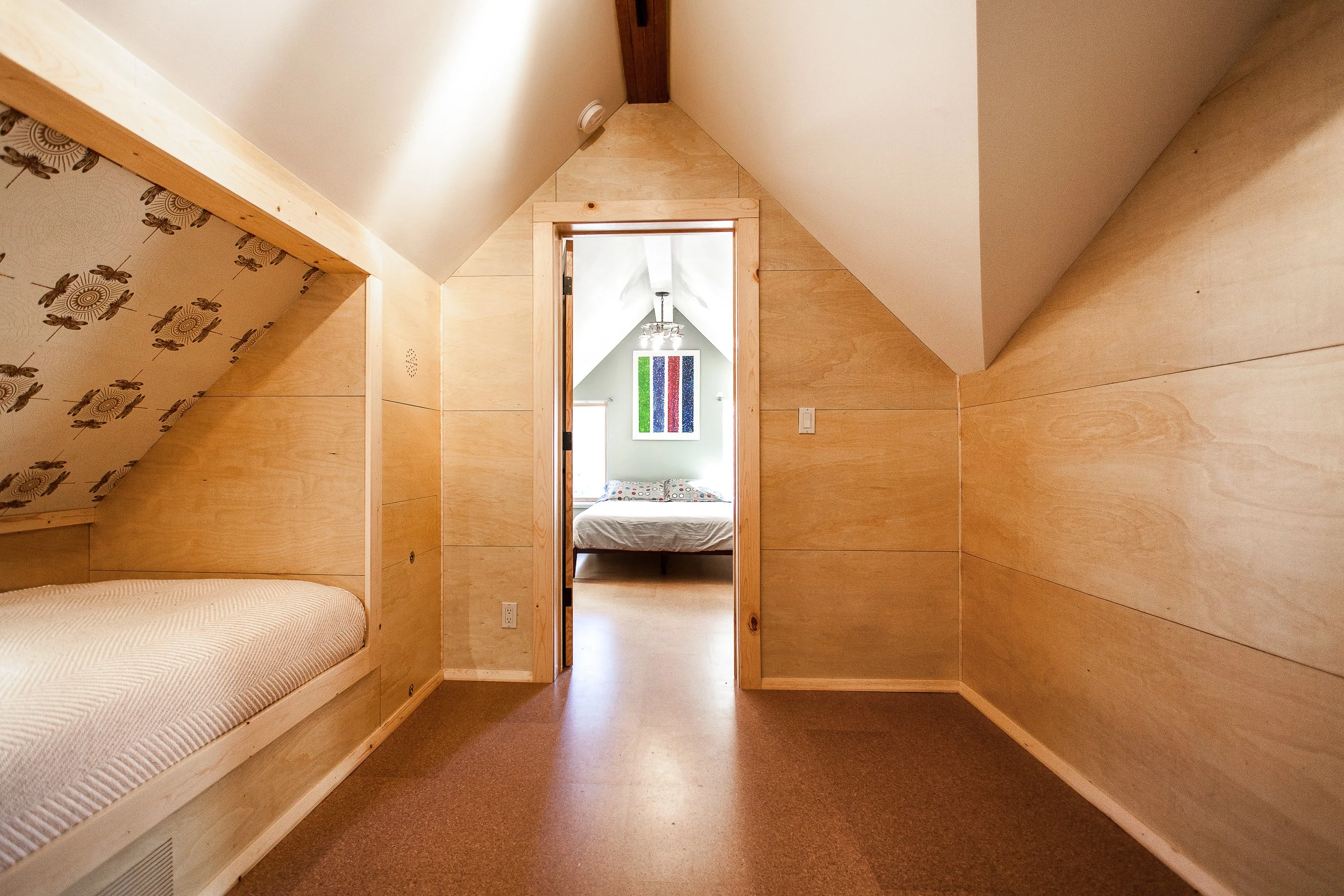
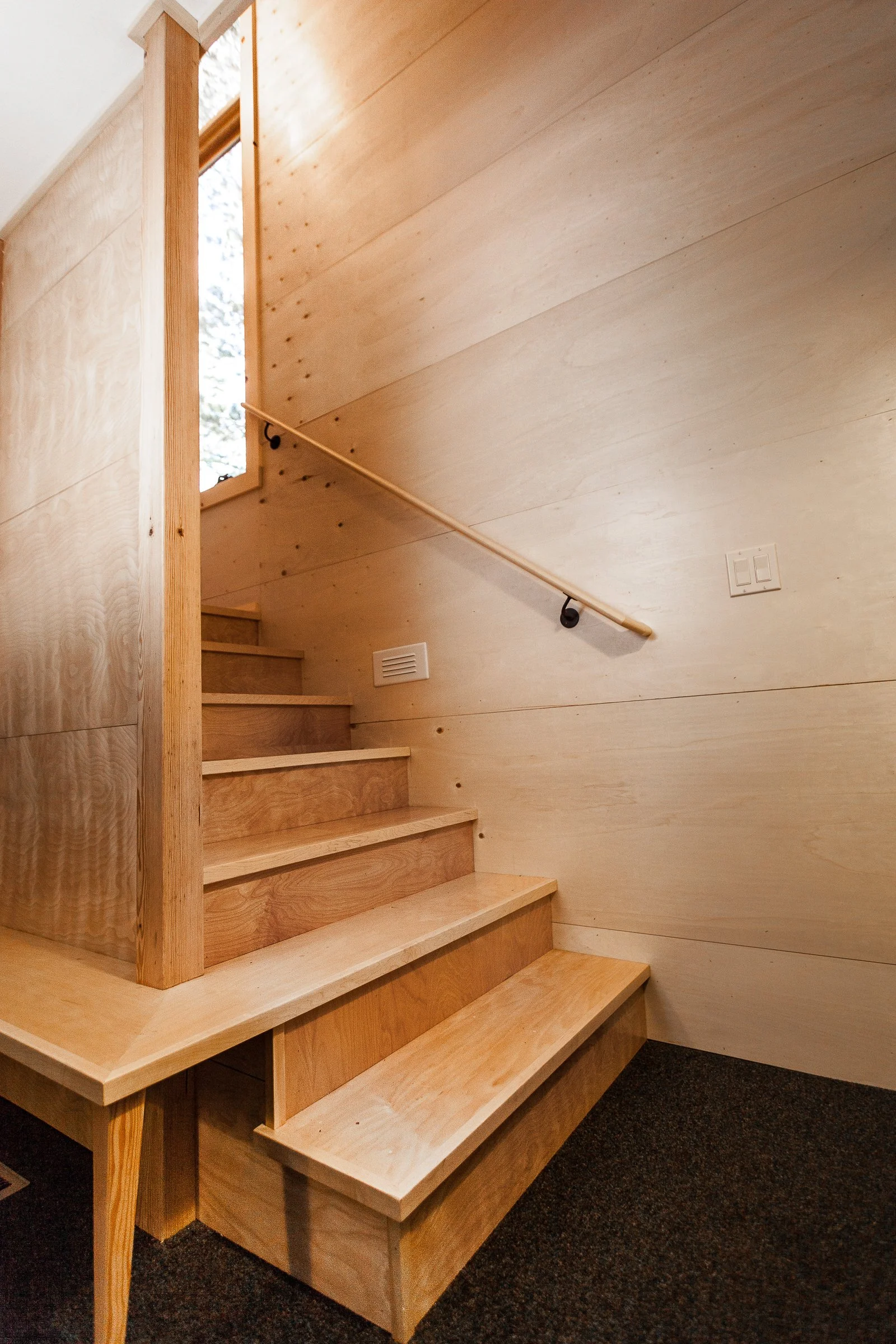
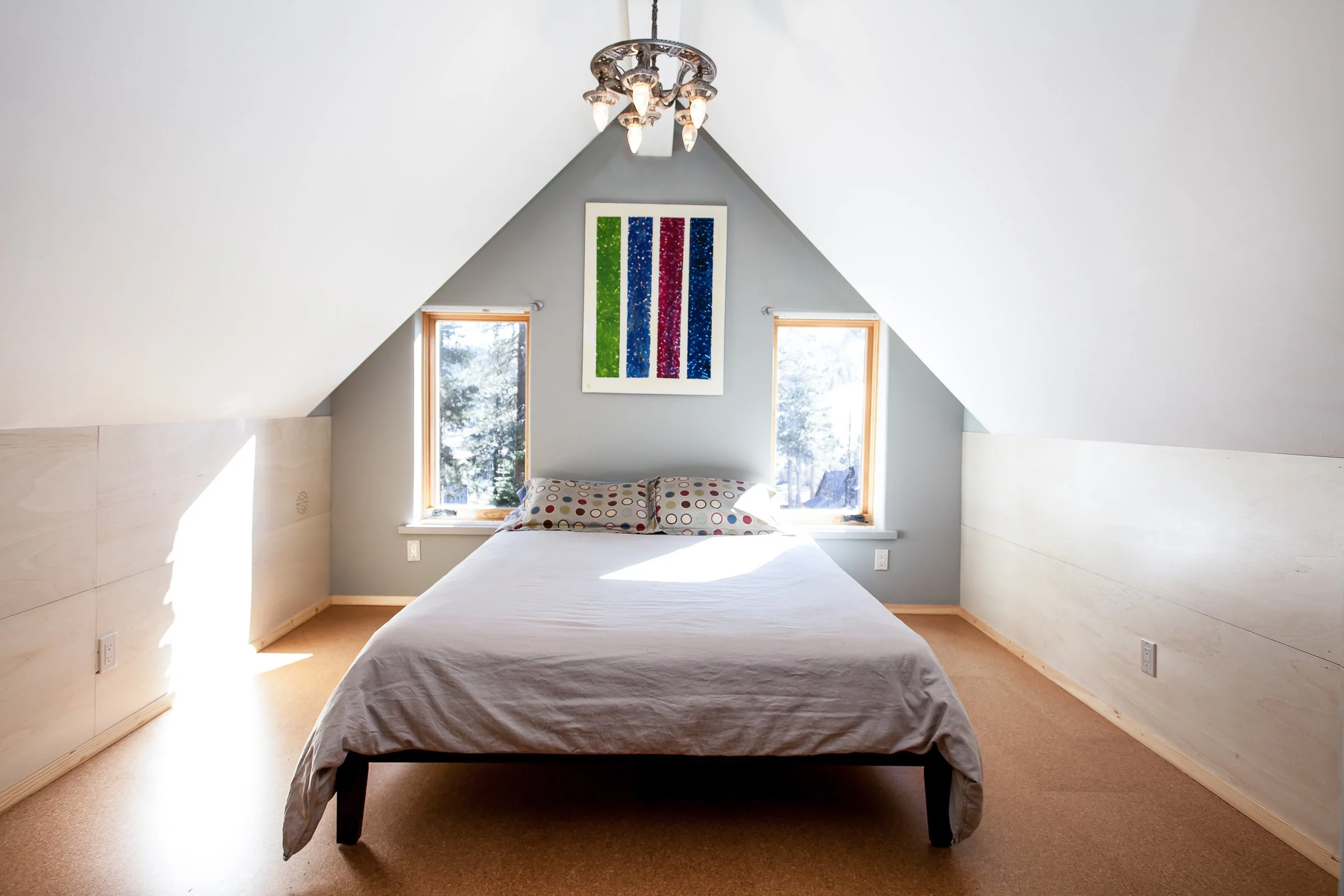
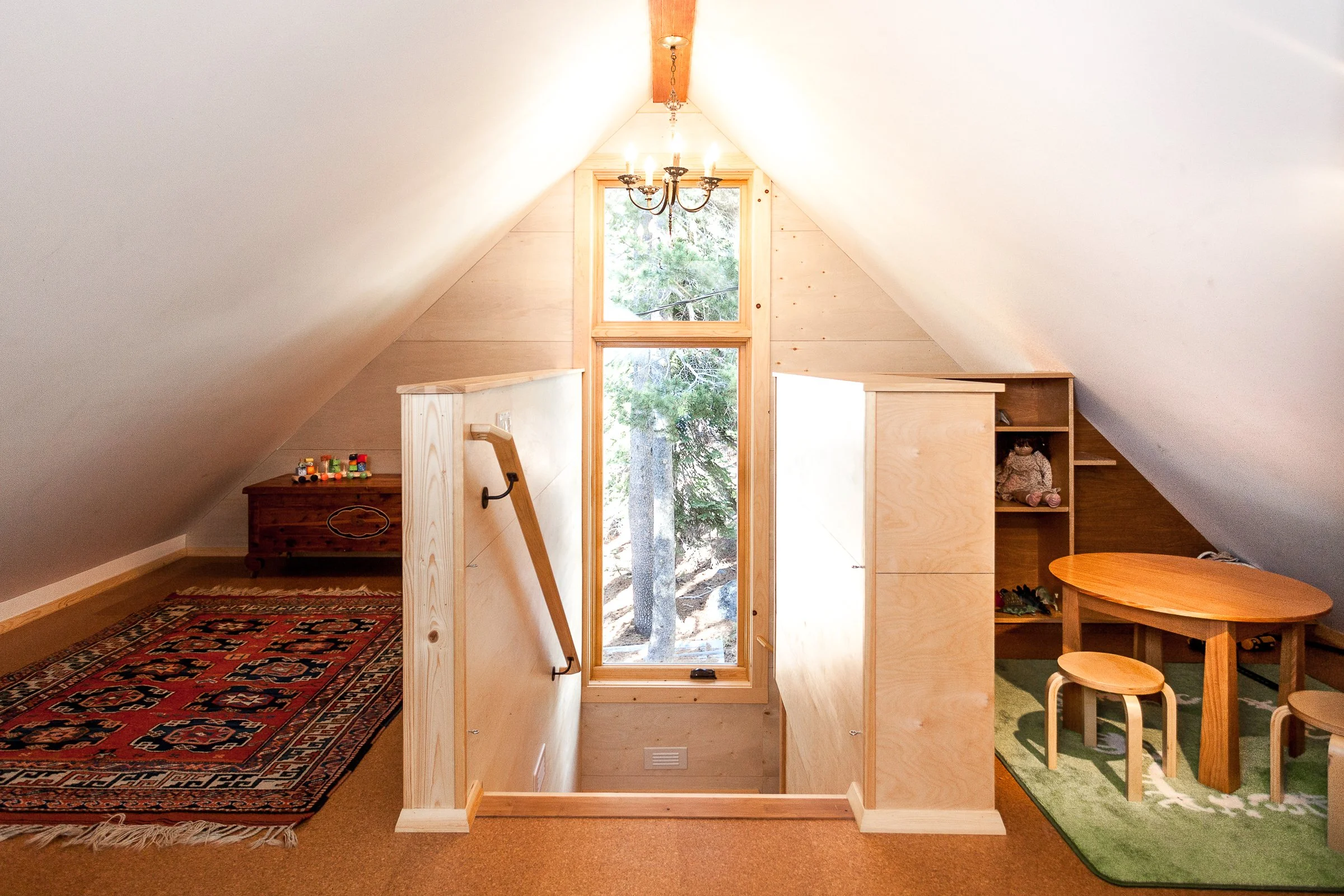
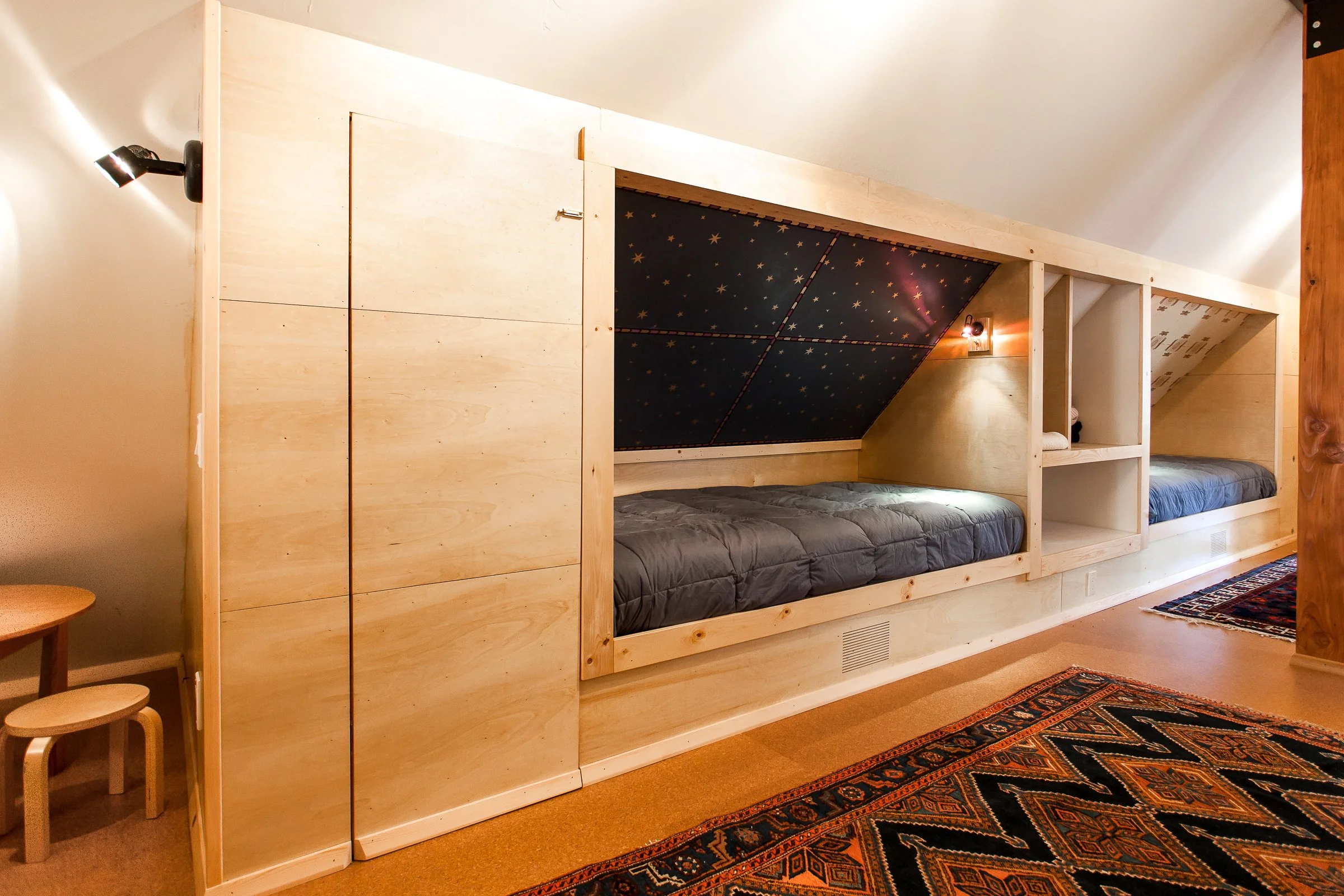
The upstairs attic was converted into a bunk room with two petite bedrooms and a shared bathroom. The steep underside of the cabin roof is filled with built-in storage and built-in bunk beds for fun and cozy spaces. Each bunk bed ceiling has hand printed wallpaper, scraps leftover from a previous project repurposed. Cork flooring provides sound dampening and warmth under foot.
High Performance Highlights

Assembly
Improved air-sealing, thermal free bridge details and upgraded insulation were addressed in the building envelope. Using a combination of closed cell spray foam and sprayed in fiberglass in the existing walls, roof, and floors maximized the r-values in the existing structure. Because there was an existing rock fireplace, complete thermal free bridging in the assembly could not be fully addressed and, as with all projects, there was a balancing act between how far financially the energy efficiency could be pushed. Nevertheless, a comfortable and low-energy building was achieved.